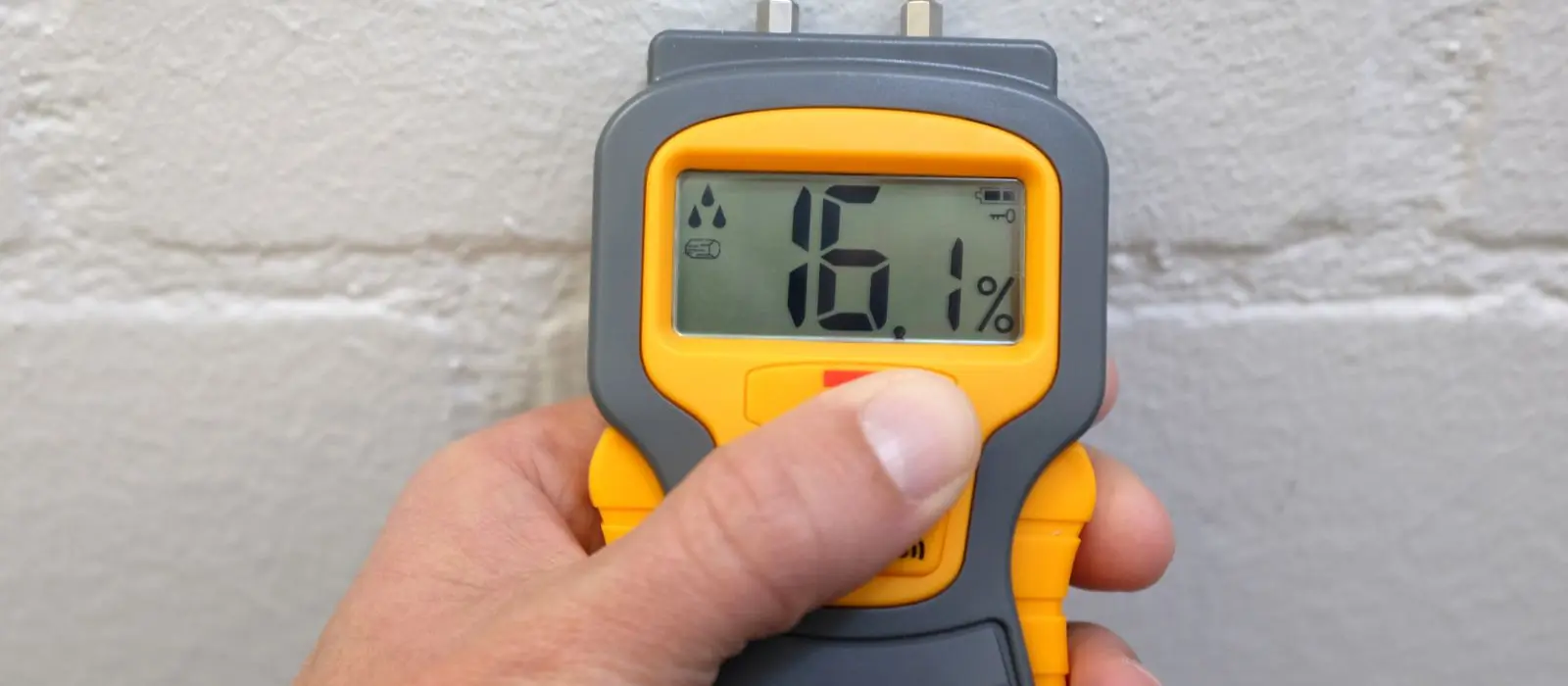
Why a room that feels dry can still be wet
Structural drying is the phase after the standing water is gone. Water soaks into studs, plates, subfloor, plaster and concrete, and those materials release moisture slowly. A room can feel dry to the hand while the framing behind the wall is still wet.
We use dehumidifiers and air movers to pull that moisture out of the materials and out of the air, and we measure the result. The first hours are covered on our water mitigation page, and bulk removal on emergency water removal.
ANSI/IICRC S500 is a published standard that sets drying goals from measured readings, and it describes drying goals built on measured readings. You can ask any company how it sets and records its goals.
Setting a dry goal from your own materials
A moisture meter reads a number, and the number only means something against a baseline. The crew takes readings on unaffected materials of the same kind elsewhere in your home, such as a dry wall stud or a dry section of floor. That reading becomes the goal for the wet area.
A thermal imaging camera shows temperature differences, which can reveal where water traveled. It does not measure moisture, so we confirm what it shows with the meter.
| What the reading shows | What it means | What we do |
|---|---|---|
| Surface dry, cavity reading high | Water is still inside the wall | Open baseboards, drill small holes or use a cavity drying system |
| Floor reading high under dry-looking wood | Subfloor is holding water | Place drying mats and raise airflow across the floor |
| Readings drop each visit | The system is working | Keep equipment in place and move air movers as areas dry |
| Readings match the dry goal | Materials have reached the target | Record the final readings and remove the equipment |
The equipment and what each piece does
LGR dehumidifiers
Low grain refrigerant units pull moisture from the air so the air can take more from wet materials.
Desiccant dehumidifiers
These can help in cool or low-humidity conditions, when a refrigerant unit loses efficiency.
Air movers
Placed to push air along wet surfaces, they speed up how fast materials release water.
Floor drying mats
Hardwood and subfloor drying mats draw moisture from the board without tearing the floor up.
Wall cavity drying
Small holes or lifted baseboards let dry air reach framing and insulation inside the wall.
Power, breakers and safety while equipment runs
Drying equipment runs around the clock, and each circuit in a home can only carry so much. The crew plans cords across several circuits, so check that your breakers are labeled and that someone can reach the panel.
Dehumidifiers add heat to a room, and the equipment is loud. Do not switch it off to sleep, because a stopped unit lets humidity climb back. Tell the crew if noise is a problem and they can adjust placement.
Water near electricity
If water is still touching outlets, a panel or wiring, stay out of it. Cut power at the panel only if the panel is dry and safe to reach, and call the utility or 911 first for gas or electrical risk.
Never run a cord through standing water. A licensed electrician should check any wiring that got wet before it is energized.
Walls, floors and plaster that dry slowly
Walls and cavities
Drywall paper and the gypsum core hold water, and insulation holds more. Where wall cavities are wet, we open baseboards or cut small access holes so dry air can reach the studs. Wet insulation that dries slowly may have to come out, and persistent dampness can lead to mold remediation. If a wall must be cut open, our water damage repair page covers the rebuild.
Floors and subfloors
Hardwood, laminate and plywood subfloor take on water at the edges and seams. Drying mats and steady airflow can save a floor that is caught early. Concrete dries from the surface down, so a slab can read wet long after the room feels normal.
Walls still feel damp?
Call the 24/7 line and we will take readings before you close anything up.
Visits, logs and when drying is called done
On each monitoring visit the crew reads the same points again, writes the numbers down and adjusts the equipment.
Drying is finished when materials reach the goal, not when a set number of days has passed. Equipment leaves only after the final readings are recorded.
What changes how long drying takes and what it costs
- The materials: plaster, drywall, hardwood, concrete and carpet dry at different speeds
- How long the materials sat wet before drying began
- The size of the wet area and the number of rooms affected
- Weather and humidity, and whether windows can be opened
- How many air movers and dehumidifiers the job needs
- The number of monitoring visits before readings reach the goal
Insurance and drying records
Sudden and accidental water damage is often covered, and gradual leaks and neglect often are not. Flood is usually excluded from homeowners policies and needs separate flood coverage. Check your policy or ask your insurer.
We keep moisture readings and dated photos from the first visit for your claim, and we do not promise coverage.
Mistakes that slow drying
- Turning equipment off at night because of the noise
- Closing windows and doors of a room that the crew wants ventilated
- Assuming a dry surface means a dry cavity
South Gate buildings and shared walls
The EPA's mold guidance ties drying speed to mold risk: wet materials should be dried or discarded within 24 to 48 hours. That is why drying equipment goes in quickly, and why wet items that cannot dry in time are removed instead of waiting.
The South Gate city history on Wikipedia describes homes and factories built mostly between 1910 and 1940. Many older houses have plaster over lath, which holds water and dries slowly, so tell the crew the age of your home and ask about testing materials before demolition.
Wikipedia also describes the Tweedy Mile downtown business district along Tweedy Boulevard, which the city is revitalizing under a 2019 specific plan. Older storefronts with shared walls let water travel between units, so tell your neighbors and the landlord quickly. Owners and tenants in Compton and Huntington Park can call the same line.
Need the drying done right?
Call (213) 776-0579 and the crew will explain the plan.
Structural drying questions
Yes. The 24/7 line is answered around the clock. A same-day visit is offered when a crew can be spared, though no arrival time is stated.
It depends on the materials and how wet they are, not on a fixed number of days. Readings on each visit show how close the job is to the goal.
Air movers and dehumidifiers run continuously, and dehumidifiers add heat to the room. Switching them off lets humidity rise again and slows the work.
Sometimes. Small holes and lifted baseboards let dry air reach the cavity. If insulation or drywall stays wet, the crew will explain what must come out.
We compare readings in the wet area with readings from unaffected materials in your home. When they match, the job is done.