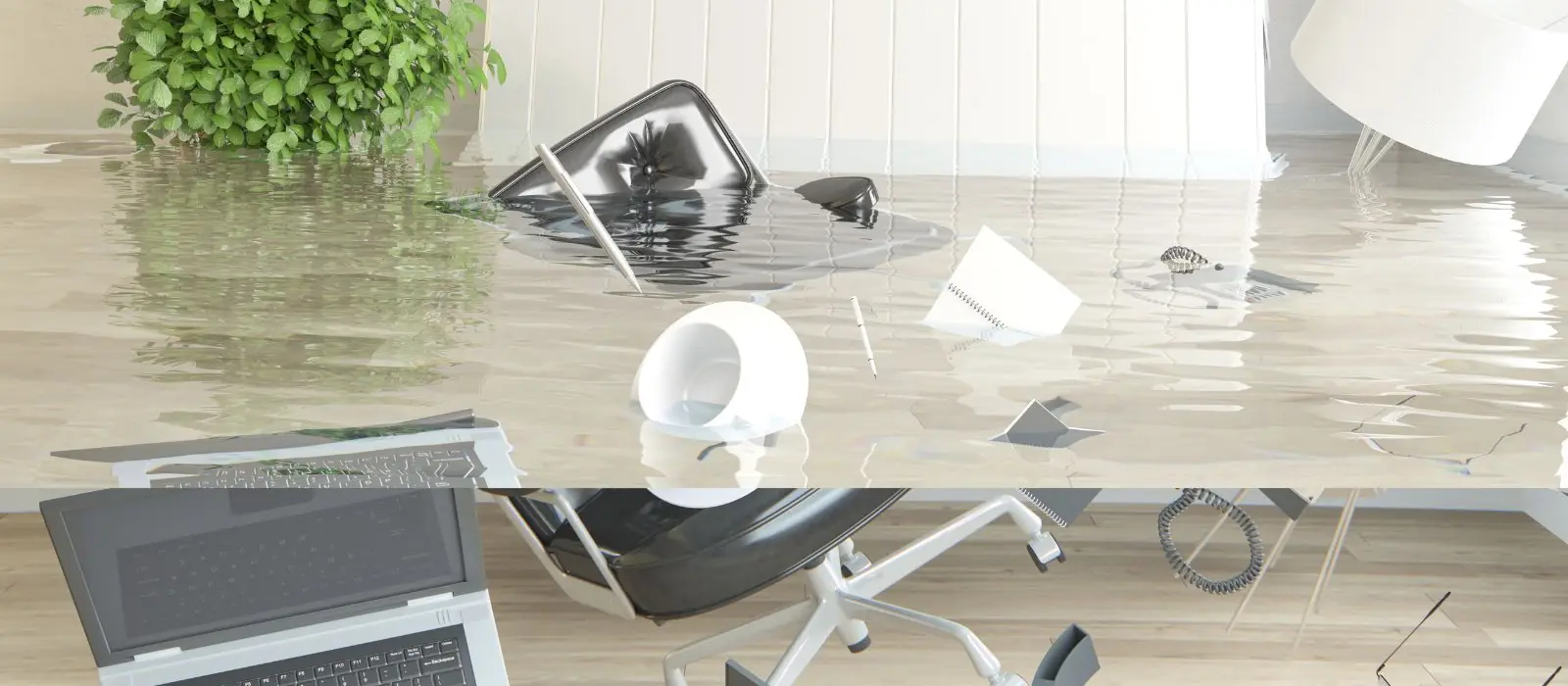
What a commercial water loss involves
A commercial water loss is water damage in a space where people work, sell or store goods, and it differs from a house loss in who is affected. Water leaves one unit and enters another, the building owner holds part of the structure, and every day closed costs income. We extract the water, dry the structure, clean the space and coordinate the rebuild, working with your plumber, roofer or electrician for the cause.
Commercial spaces also have features that slow drying: suspended ceilings, carpet tile, shared walls, storage racks and long runs of drywall partitions. The ANSI/IICRC S500 standard, the published benchmark for professional water damage work in buildings, guides how water is classified and dried.
Safety first: the first hour at a flooded business
- Get everyone out of any area with standing water near outlets, panels or equipment.
- Shut off the water at the main or at the fixture, if you can reach the valve safely.
- Cut power to the wet area only if the panel is dry and you can reach it on dry ground.
- Call the utility or 911 first for any gas or electrical risk, including sprinkler lines near live wiring.
- Keep staff and customers out of dark, foul water until it is identified.
Then call the 24/7 line at (213) 776-0579. Notify your landlord or property manager, because they may need to shut a building valve or alert the unit next door.
| Factor | In a commercial space | What it changes |
|---|---|---|
| Who owns the walls and ceiling | Often the landlord, while the tenant owns contents | Both sides may need to be notified quickly |
| Shared walls and ceilings | Water travels into neighboring units | Drying plans must include the adjoining space |
| Floors | Carpet tile, vinyl plank, sealed concrete | Each dries or fails differently |
| Inventory and records | Stock, files and equipment sit low | Move and photograph items before cleanup |
| Downtime | Closed days mean lost income | Scope and drying order are planned around reopening |
Our process on a shop, office or shared building
The crew starts with a walkthrough and moisture readings, then removes standing water with pumps and extraction units, as in our emergency water removal work. A thermal imaging camera and moisture meters find wet insulation, ceiling tiles and wall bases that look dry. Air movers and LGR dehumidifiers dry the structure, and readings are logged each visit.
Stop and protect
Water is stopped at the source and contents are lifted or moved to dry areas.
Extract
Pumps and extraction units pull the water off floors and carpet tile.
Dry and monitor
Air movers and dehumidifiers run while moisture readings are logged. See structural drying for how that phase works.
Clean and rebuild
Wet materials that cannot be saved come out, and surfaces are cleaned. Our water damage cleanup page covers that stage.
We do not repair plumbing, roofs, sprinkler systems or building equipment. A licensed plumber, roofer or fire sprinkler contractor fixes the cause, and we can work alongside them.
Water in the shop or office?
Call (213) 776-0579. The line is answered around the clock.
Documenting the loss for landlord and insurer
Take photos and short video before anything is moved, and keep a running list of damaged inventory, equipment and supplies with approximate values. We keep moisture readings and dated photos during the job. Your own records matter most for the business interruption conversation, which depends on your policy.
Keep these for your claim
- Photos of the source, standing water and damaged stock
- A written list of inventory, equipment and records affected
- Names of your landlord contact, property manager and insurer
- Invoices from the plumber or roofer who fixed the cause
Insurance questions for a business water loss
Sudden and accidental damage, such as a burst supply line, is often covered by a commercial property policy, while slow leaks and neglected maintenance often are not. Flood is usually excluded and needs separate flood coverage. Business interruption coverage is its own question, so ask your insurer what it requires. Check your policy before assuming anything.
What changes the cost of a commercial job
- Area of the loss and how many units or rooms it reached
- Water category and how long it sat before extraction
- Floor and ceiling types, such as carpet tile, suspended ceiling or sealed concrete
- Shared walls that force drying in a neighboring space
- Wet stock and fixtures that must be moved or removed
- Equipment count and monitoring days
Tenants, landlords and neighbors
Who pays for what depends on your lease and policies, not on us. As a tenant, report the loss to your landlord in writing right away. As a landlord, tell the tenants next door. Many people rent their workspace in Huntington Park and Paramount, where tenant and landlord notice comes up often.
Water losses on South Gate business corridors
Tweedy Mile is the downtown business district along Tweedy Boulevard, and Wikipedia's city page notes a 2019 Tweedy Boulevard Specific Plan aimed at revitalizing it. Older storefronts with shared walls let water move between units. If one shop floods, tell the neighbors and the landlord at once, so the adjoining space can be checked before damp walls go unnoticed.
Azalea Regional Shopping Center, described on Wikipedia as a 376,000 square foot center at Firestone Boulevard and Atlantic Avenue, shows how many tenants can share one property. Confirm who notifies the landlord, and ask your insurer about business interruption coverage before a loss.
The city's permit guidance says construction and repair work typically needs a permit, so ask the landlord or building owner who will apply for one before a rebuild. Its Building and Safety Division can say whether a given rebuild needs one. A rebuild that opens walls or touches wiring or plumbing may need permits, so ask before work starts.
Start the drying plan today
Tell us what happened and we will walk through the next steps.
Commercial water loss questions
Yes. The 24/7 line is answered around the clock, and same-day response is offered when crews can be spared. We do not promise an arrival time.
We can talk through the schedule when you call. Crews are dispatched through the 24/7 line, and we plan work to limit disruption where the structure allows.
Water in a shared wall can reach the unit next door, so both sides should be told. The drying plan may need access to the adjoining space, which your landlord or property manager can arrange.
Photos, a list of damaged inventory and equipment, the cause of the loss and the plumber's or roofer's invoice. Ask your insurer which documents it wants.
No. A licensed plumber, roofer or other trade fixes the cause. We handle extraction, drying, cleaning and the rebuild coordination, and we can work alongside them.
It is usually treated as a flood loss, which standard commercial property policies often exclude. Our flood damage restoration page covers that work, and your insurer can explain your coverage.