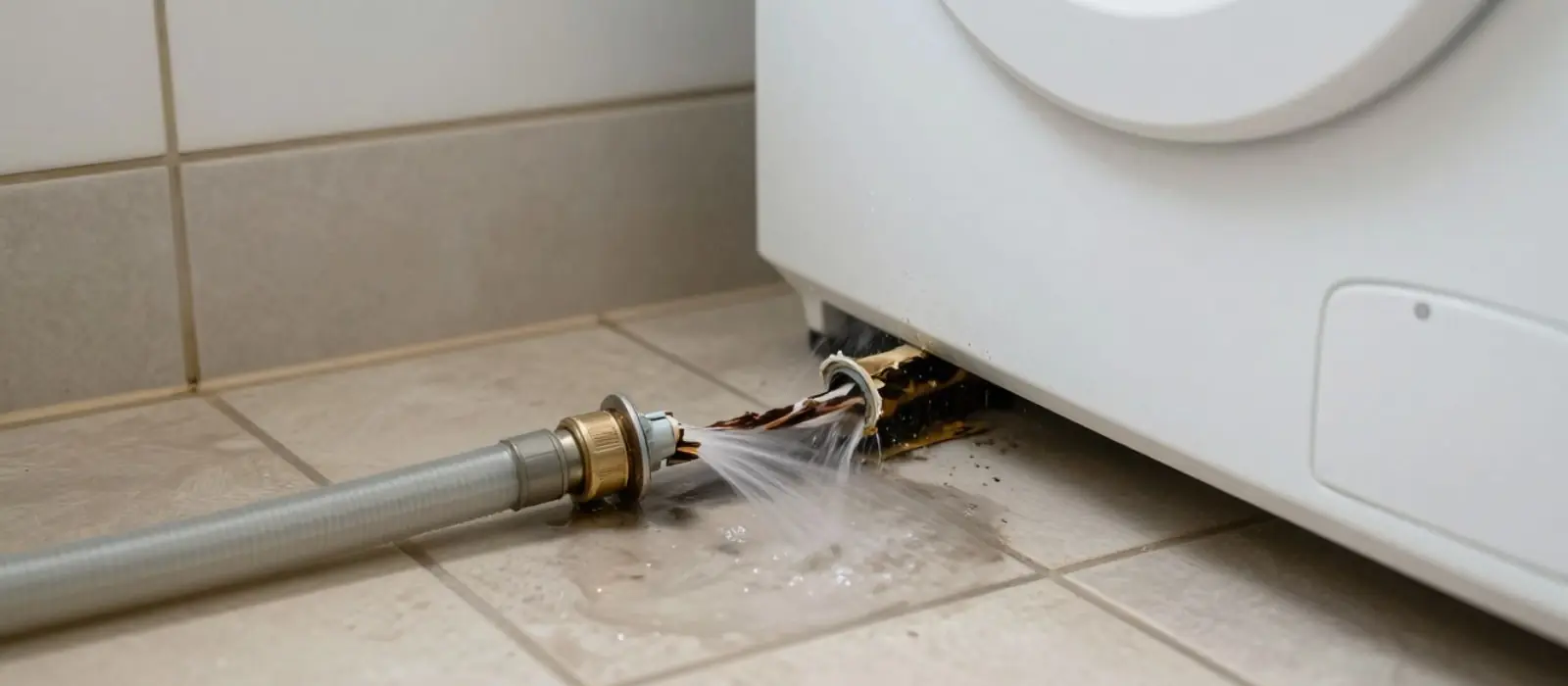
Where appliance leaks start and why they hide
A washing machine hose lets go, a dishwasher door seal weeps, or a refrigerator ice-maker line drips behind the unit for weeks. We extract the water, dry the structure and coordinate the rebuild. A licensed plumber or appliance technician repairs the hose, valve or machine, and we can work alongside them.
The slow leaks cost the most. A hose that seeps a cup a day never trips an alarm, yet it can soak particleboard subfloor and the base of a cabinet before a soft spot or a musty smell gives it away. Rubber and braided hoses both age, and the fittings are the usual weak point.
Water from a supply line starts out clean. The ANSI/IICRC S500 standard, a written industry standard for handling water damage, treats clean water and washer discharge differently,. A leaking drain hose releases used wash water, which is handled with more care than a supply line.
What the leak is telling you
| What you see | Likely source | What it means |
|---|---|---|
| Damp floor in front of the washer after a cycle | Split inlet hose, loose fitting or a drain hose out of the standpipe | Water may be under and behind the machine, not just on the surface |
| Floor that feels soft or springy near the dishwasher | Slow supply line or door seal leak | The subfloor is probably wet and needs moisture readings |
| Musty smell and no visible water | Hidden seep under the unit or inside the next cabinet | Conditions are right for mold growth, so check early |
If your signs sit in a kitchen, our kitchen water damage page covers cabinets, toe kicks and countertops in more detail. This page stays with the appliance and the water it releases.
Safety in the first hour at a leaking appliance
Stop the water first. Washers and dishwashers usually have small shutoff valves on the wall or under the sink, and turning them fully clockwise closes the supply. If a valve is stuck or the hose is spraying, close the main house valve instead.
Power comes second. Unplug the appliance only if the outlet and the floor in front of it are dry. If water is reaching an outlet, a power strip or the panel, stay out of it, switch off the breaker only if the panel is dry and safe to reach, and call an electrician or the utility.
Gas and heavy machines
A gas dryer or range near the water is a separate risk. If you smell gas, leave the home and call the gas utility or 911 before you call us.
A washer full of water is heavy and may still be plugged in. Leave it where it is until the power is off and someone can help you move it.
How we dry the floor, cabinet and subfloor
Water collects under a machine where air cannot reach, so the crew works from the surface down.
Map the wet area
A moisture meter and a thermal imaging camera trace how far the water went, including under cabinets and into nearby walls.
Extract the water
Portable extraction units and wet vacuums pull water from the floor, carpet and cabinet bases.
Open the hidden spaces
We remove toe kicks and baseboards and lift flooring edges so air can reach the subfloor.
Dry with equipment
Air movers and LGR dehumidifiers run until readings match dry materials elsewhere in the home.
Check and document
We return to read the meters and keep dated photos and readings that can support your claim.
The detail of that last stage sits on our structural drying page. Swollen particleboard or soaked pad comes out during water damage cleanup, and a cabinet base that stays wet can need mold remediation or rebuilding through water damage repair.
Water under an appliance?
Call the 24/7 line before the subfloor soaks it up.
What changes the cost of an appliance leak
- How long the leak ran before anyone noticed it
- Whether the water stayed on the surface or reached the subfloor
- Flooring type, since carpet, vinyl, tile and laminate dry differently
- Cabinet bases, toe kicks or drywall that must be opened or removed
- The number of equipment days and monitoring visits
- Whether the source was clean supply water or a drain line
Sudden hose burst or slow seep: how insurance sees it
Sudden and accidental damage, such as a supply hose that bursts overnight, is often covered by a homeowners or renters policy. Gradual leaks and damage from neglect are often not. Check your policy or ask your insurer how it treats appliance leaks and what documents it wants.
Mistakes to avoid and habits that prevent a repeat
- Wiping the surface and moving on while the subfloor stays wet
- Running fans without opening toe kicks or lifting flooring edges
- Pushing a wet machine back into place before the floor is dry
Check hoses for bulges, cracks and rusty fittings, and replace tired ones.
South Gate homes, older floors and permit questions
EPA guidance sets a window of one to two days before wet materials risk mold, which is why a leak behind a washer is worth chasing early. For an appliance leak, that means a damp cabinet base or a soft floor should be checked the day you find it, not after the weekend.
Wikipedia's account of South Gate says its farmland filled with homes and factories in the 1910 to 1940 period, and many early homes were owner-built. In an older house the floor under a machine may be old plank, linoleum or layered paint, so tell the crew the age of your home and ask about testing materials before any demolition.
On its website the City says repairs that alter plumbing usually need a permit, which matters if a leak ends with a moved drain or a new supply line. If the fix involves moving a drain line or rebuilding a cabinet run, call the city's Building and Safety Division before work starts. Renters in Huntington Park and owners in Lynwood face the same hose problems, and renters should report a leak to the landlord in writing.
Found a leak behind the machine?
Turn the valve, then call (213) 776-0579 and we will explain the next step.
Appliance leak questions
Yes. The 24/7 line is answered around the clock. A crew goes out the same day when one can be spared, but no arrival time is promised.
No. A licensed plumber or appliance technician repairs the hose, valve or machine. We dry and clean the water damage and can work alongside them.
Soft, springy or discolored floor and a musty smell are warning signs, and a moisture meter confirms it.
Supply water is clean at first but picks up dirt as it spreads, and washer drain water is used wash water. Wear gloves until the area is cleaned.
Sudden and accidental leaks are often covered and slow leaks often are not. Check your policy or ask your insurer before you decide.
It depends on materials and how deep the water went, not on a fixed number of days. Readings tell us when the floor and cabinets are dry.