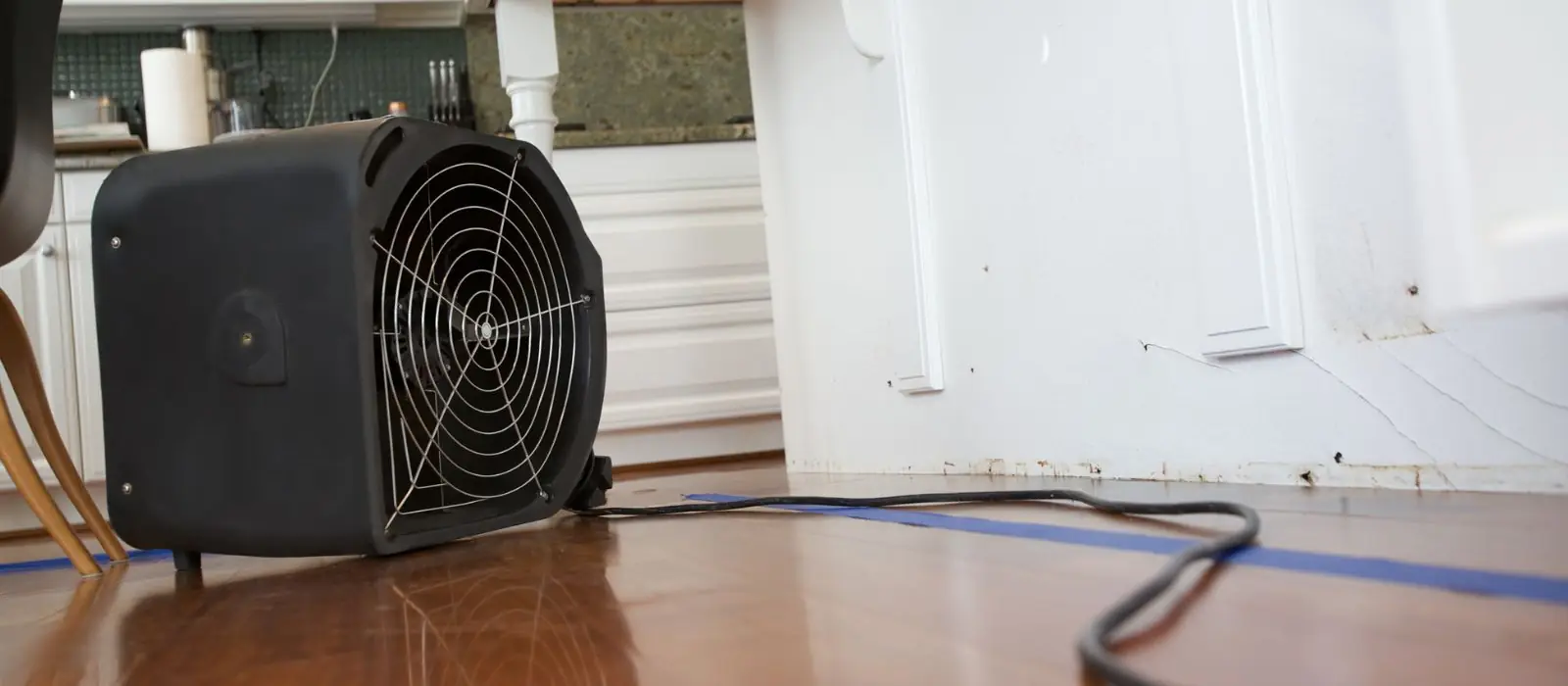
Where kitchen water damage starts
Kitchen water damage is water that has soaked the cabinets, flooring, walls or subfloor of a kitchen. The usual sources are the supply lines and drain under the sink, the dishwasher, the refrigerator ice-maker line and a worn faucet. We extract and dry the water, clean the room and coordinate the rebuild, the way our water damage repair service does for whole houses. A licensed plumber fixes the pipe or fitting that caused it.
Kitchens are hard to dry because so much is built in. Toe kicks hide a closed air pocket and the sink base hides every connection, so a slow drip can run for weeks before anything looks wrong.
Most leaks start small, with a loose nut or an aged supply line. Water follows the pipe to the cabinet floor and then the subfloor. Failed appliance hoses have their own page on appliance leak water damage, and this page is about the room around them.
What the kitchen is telling you
| What you see | What it usually means | First move |
|---|---|---|
| Swollen or crumbling cabinet floor | Water has sat on the cabinet base for some time | Empty the cabinet, photograph it and call |
| Toe kick bowing or peeling | Water reached the base from behind or below | Do not pry it off, let a crew meter it first |
| Floor planks cupping or vinyl seams lifting | Water is trapped under the flooring | Stop using the fixture and call |
| Musty smell with dry-looking surfaces | Wet material hidden behind the cabinets | Ask for moisture mapping |
Kitchen safety in the first hour
Close the small angle stop valve under the sink or behind the dishwasher. If it will not turn, shut off the main water valve where the supply enters the house. Stop using the sink until a plumber looks at the line.
Before you open the cabinet
Kitchens mix water with outlets and appliance cords. Do not stand in water to unplug anything. Cut power at the panel only if the panel is dry and safe to reach, and for gas or electrical risk, call the utility or 911 first.
Kitchen flooring: what survives water and what does not
| Floor type | What water does | Usual outcome |
|---|---|---|
| Ceramic or porcelain tile | The tile is fine, but grout and subfloor can hold water | Dry in place, check below |
| Sheet or plank vinyl | Water gets trapped under the top layer | Lift and dry, replace if seams or backing are wet |
| Laminate | Edges swell and the core breaks down | Usually replaced when soaked |
| Hardwood | Boards cup as they absorb water | Often dried with mats if caught early |
Leak under the sink right now?
Call the 24/7 line and a crew will plan the extraction and drying with you.
Drying behind and under the cabinets
We start by extracting standing water, then pull the toe kicks and any cabinet base panels so air can reach the closed spaces. Moisture meters and a thermal imaging camera show how far the water went, including behind the dishwasher and under the range.
Air movers push dry air into the openings while LGR dehumidifiers pull moisture out of the room. Small holes in cabinet bases let us force air into closed cavities, and drying mats work on hardwood and subfloor. Our structural drying page explains how the equipment is placed and monitored.
What a kitchen drying visit covers
- Toe kick and base panel removal for airflow
- Air mover and LGR dehumidifier placement
When cabinets and countertops have to come off
Solid wood boxes that were wet briefly can often stay. Particleboard swells, loses strength and rarely recovers, so a wet particleboard base is usually removed. Countertops come off when water sits beneath them or when the cabinets below must go.
Taking cabinets out also lets us dry the wall and floor behind them and check the back panels for mold. If growth is found, mold remediation has its own steps, and ANSI/IICRC S520 is the published industry reference for it. Stone tops are heavy, so removal and reinstall are planned with the rebuild contractor. Afterward, the water damage cleanup steps cover washing and sanitizing the room.
What changes the cost of a kitchen job
- Water category and how long the water sat before drying began
- How many cabinets are wet and what they are made of
- Flooring type, area and whether the subfloor is wet
- Days of equipment and monitoring needed
Kitchen leaks and your insurance
A supply line or dishwasher hose that fails suddenly is often covered as sudden and accidental damage. A drip that ran for months is often treated as maintenance and excluded, and flood is usually excluded from homeowners policies. Check your policy or ask your insurer, and keep the failed part for the adjuster. ANSI/IICRC S500 is an industry document that sets out how water damage should be handled.
Kitchen mistakes that cost you cabinets
Shutting the cabinet door on a wet base
A closed door traps moisture against the particleboard. Leave it open and keep air moving.
What South Gate kitchen owners should know
The City of South Gate's 2021 Consumer Confidence Report, its city water quality report, lists total hardness of 226.3 mg/L, with a range of 200 to 250, plus calcium at 69.0 and magnesium at 13.5 mg/L. Hard water leaves mineral scale that can stiffen old shutoff valves, so open and close the valves under your sink once while nothing is wrong. If one will not turn, the City water operations contact in that report is (323) 563-5796.
The Golden State Water website lists South Gate and Hollydale in its Central Basin West service area, with customer service open 24 hours at 1-800-999-4033. That means some addresses are served by the City and some by Golden State Water, so find your provider's name and 24-hour number on your water bill before you need it.
The City of South Gate website says permits are typically required for home improvement, repair, alteration and construction, and for plumbing, mechanical and electrical improvements. Building and Safety is at 8650 California Avenue, (323) 563-9549. A kitchen rebuild that moves a drain or adds an outlet may need a permit, so ask before work starts. We handle kitchen losses the same way in Downey and Paramount.
Soft cabinets or a damp kitchen floor?
Call and describe what you see. We will explain the scope before work starts.
Kitchen water damage questions
Yes. The 24/7 line is answered around the clock. A same-day visit is possible when crews are available, with no arrival time promised. Shut off the water at the angle stop and call.
No. A licensed plumber repairs the pipe, valve or fitting. We dry and clean the water damage and can work alongside the plumber.
Not always. Solid wood that was wet briefly can often dry in place. Swollen particleboard is usually replaced, and a moisture meter helps decide.
We coordinate the rebuild after drying, following dry readings and any city permits.
A musty smell, dark spots on the back panels or swollen bases are warning signs. A crew can open the toe kick and take readings. The EPA says to dry or discard wet materials within 24 to 48 hours to limit mold growth.